
May 2026 Utility News Roundup: 4 Stories You Should Know
May was a month where one theme kept showing up everywhere: load is growing faster than the industry can keep up with. The four stories below are the clearest examples we saw, from the biggest utility merger in history to a federal rule that will reshape how data centers connect to the grid, and from the new reality of gas plant economics to the fact that you basically cannot buy a transformer right now. Here is what we think you need to know.
The Largest Utility in History: NextEra and Dominion Combine
What happened: On May 18, NextEra Energy and Dominion Energy announced an all-stock merger valued at around $66.8 billion, creating a company with an enterprise value over $400 billion. NextEra shareholders will own about 74.5% of the new entity, Dominion shareholders the rest. The companies also committed to $2.25 billion in customer bill credits across Virginia, North Carolina, and South Carolina, and they pitched the deal as a direct response to AI-driven load growth. Regulatory review at FERC, the DOJ, and the state commissions in Florida, Virginia, and the Carolinas is expected to take 12 to 18 months.
Why it matters: It is hard to overstate the scale. NextEra was already the largest US utility by market cap at about $168 billion. Add Dominion and the combined company is in a tier by itself, well ahead of Constellation at $114 billion, Southern Company at $96 billion, and Duke Energy at $91 billion. To put it another way, American Electric Power serves 5.6 million customers across 11 states, and it would still be less than half the size of the new NextEra by market value. For the state regulators in Virginia and the Carolinas, this is the biggest test of utility merger oversight in a generation, and the outcome will set the bar for the consolidation wave that the Constellation acquisition of Calpine kicked off in January.
Our take: A company this big changes how everyone else negotiates with it, whether you are an equipment supplier, a hyperscaler signing a data center deal, or a PUC reviewing a rate case. The number we are watching is not the headline price. It is how much of the $2.25 billion in customer credits survives the regulatory process.
Read more:
NextEra Energy and Dominion Energy to Combine (NextEra newsroom)
Combined NextEra-Dominion Would Have 130-GW Large-Load Pipeline (Utility Dive)
FERC To Issue Federal Data Center Interconnection Rules
What happened: On April 16, FERC committed to a final action in Docket RM26-4-000 by the end of June, setting a federal framework for how large loads connect to the interstate transmission system. The proceeding came out of a Department of Energy directive last October and applies to any load over 20 MW, which covers essentially every hyperscale data center campus. Nearly 200 stakeholder comments have been filed, including an OpenAI proposal for a "national interest" designation for loads above 250 MW.
Why it matters: This is the biggest federal data center proceeding in years, and it lands at exactly the right time. US data center electricity demand grew 22% in 2025 and is on track to triple by 2030, and the current patchwork of RTO-by-RTO rules has produced multi-year interconnection queues, opaque cost allocation, and a steady stream of co-location disputes. Whatever FERC puts out will set the defaults for queue position, cost recovery, and reliability obligations across PJM, MISO, ERCOT, and SPP all at once, while those same RTOs are running their own large-load processes. It also lands in the middle of an unsettled federal-state jurisdictional debate, since state commissions still control the retail rates that ultimately collect the costs.
Our take: Whatever FERC publishes in June will become the template that every state commission either adopts, modifies, or pushes back against, and the comment record makes clear that hyperscalers and incumbent utilities want very different things. If you serve a data center cluster, plan to read the rule the day it drops and model the cost allocation under both interpretations.
Read more:
FERC to Act on Large Load Interconnection Docket by June 2026 (FERC)
FERC Tees Up June Decision on Data Center Interconnection Reform (Utility Dive)
What is in FERC's Large Load Interconnection Docket (Latitude Media)
New Gas Plants Now Cost 66% More Than They Did Two Years Ago
What happened: A BloombergNEF report from April 23 found that the cost to build a US gas-fired power plant jumped 66% between 2023 and 2025. Combined-cycle plants now come in around $2,157 per kilowatt, up from under $1,500 per kilowatt in 2023. NextEra's CEO has said separately that his company is seeing gas plant costs that have tripled. And US utilities filed for nearly 24 gigawatts of new gas capacity at state commissions in 2025, a 570% jump from 2023.
Why it matters: Three things are happening at once, and none of them are getting better soon. First, the OEMs are sold out. GE Vernova's gas turbine backlog hit 100 GW in Q1 2026 and is expected to reach 110 GW by year end. Siemens Energy is sitting on a record €136 billion backlog with delivery slots booked into 2030. Between Siemens, GE Vernova, and Mitsubishi Power, three companies control roughly two-thirds of global supply. Second, the materials are tight. Steel pipe prices more than doubled between 2020 and 2021, and tariffs on steel and copper have only made things worse. Third, labor is short and wages are rising. So utilities are filing for more gas than ever just as the price per kilowatt is climbing the fastest it has in decades, which means any resource plan built on 2023 cost curves is already out of date.
Our take: Any IRP or RFP still leaning on gas plant capex assumptions from 18 months ago needs to be rerun. Storage, demand response, and SMRs all look more competitive when gas baseload is this expensive, but the bigger story is that customers will absorb the difference through rate base unless commissions push back hard.
Read more:
Data Center Demand Drives 66% Surge in Natural Gas Power Plant Costs (TechCrunch)
GE Vernova Gas Turbine Backlog Hits 100 GW as Prices Rise (Utility Dive)
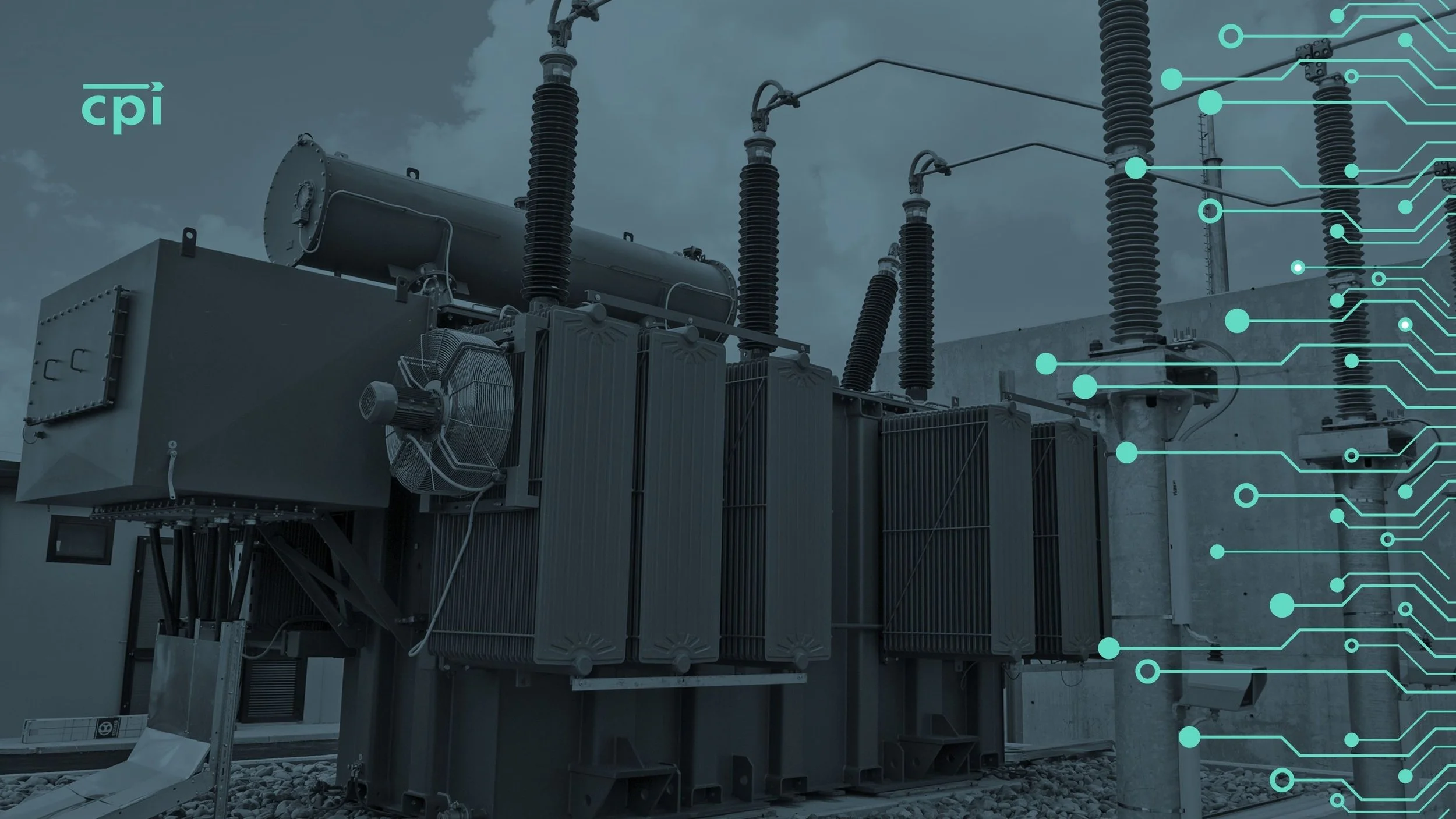
Transformer Lead Times Hit Four Years
What happened: A May 11 analysis flagged that US lead times for high-capacity power transformers have stretched to as long as four years, with PwC confirming the range. Demand for power transformers in 2026 is running about 21% above 2024 levels. Wood Mackenzie estimates a 30% national shortfall in power transformers and a 10% gap in distribution units. Demand for generator step-up units has grown 274% since 2019, and substation power transformers are up 116%.
Why it matters: This is no longer just a procurement problem. It is reshaping how utilities operate day to day. Substation expansions, generator interconnections, and transmission upgrades are getting sequenced around transformer availability rather than around the project schedule, so engineering and construction crews are either working out of order or sitting idle while equipment arrives. Storm response is changing too. Crews are pulling spare units from planned capital projects to cover failures in the field, then scrambling to backfill those projects later at a higher price. Developers are reporting that transformer delays are pushing back solar and wind farm completions, and roughly half of the US data centers scheduled to start in 2026 are expected to be canceled or delayed in part because of equipment constraints. The squeeze goes all the way down to the steel: Cleveland-Cliffs runs the only US facility producing grain-oriented electrical steel at scale, and even with about $1.8 billion in announced North American manufacturing expansions, real capacity additions will lag demand for years.
Our take: There are two things worth doing right now. The first is to bring asset management and capital planning into the same room, because the spare you pull out of inventory today is also the unit that was going to enable a substation upgrade next year. The second is to take contract terms with OEMs seriously. The utilities that locked in multi-year framework agreements back in 2023 are in much better shape than the ones still placing one-off orders today.
Read more:
Looking Ahead
The through-line for May is simple: demand keeps climbing, and the supply chain underneath it is straining at every link. Next month, watch for FERC's final action on the large-load interconnection docket, the early signals from state reviews of the NextEra-Dominion merger, and the first SPARK selections from the DOE's $1.9 billion grid modernization program. If this roundup was useful, share it with a colleague, and let us know what you want us to cover next month.
